

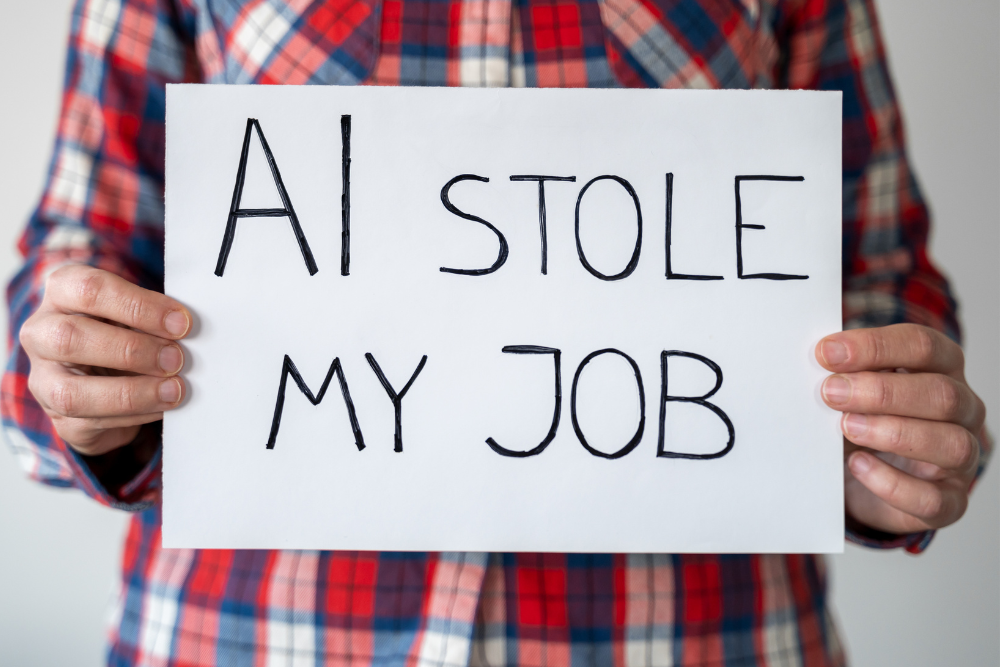
Imagine waking up one day and realizing that your job is now being done by a machine. Sounds scary, right? That’s exactly what many workers fear as we move closer to 2026. Experts are talking a lot about AI impact on jobs 2026, and the truth is, it’s already happening.
The Silent Shift: Why Work Will Never Look the Same Again
AI is not coming. It’s already here. From supermarkets to hospitals, from offices to call centers - technology is changing how we work. By 2026, the future of jobs with AI by 2026 will look very different from today.
People feel uncertain, confused, and even helpless. But here’s the good news: knowledge is power. If we understand the AI job market predictions 2026, we can be ready instead of surprised.
Falling First: Jobs at Risk of Automation by 2026
Not every job is safe. Some are more at risk than others. When work is repetitive and doesn’t need a lot of human emotion, that’s when AI can step in easily.
Here are jobs AI will replace first:
- Data Entry: Transferring data is something AI already does faster and with fewer mistakes.
- Simple Accounting: Balancing books, adding numbers - AI does it quickly and accurately.
- Call Center Agents: Basic customer questions can be handled by AI bots.
- Scheduling Tasks: Appointments, reminders, and calendars can be managed by smart assistants.
- Manufacturing: Machines already build cars and devices. AI will make them smarter.
The AI and job displacement predictions are clear: if your work follows clear steps without needing creativity or emotion, it’s time to think about next steps.
Entry-Level Isn’t Safe Anymore: The New Struggle for Starters
Starting a career is already hard. Now imagine AI taking away many entry-level jobs before 2026. That’s the reality in front of us.
AI impact on entry-level jobs includes:
- Typing and filing roles disappearing
- Retail cashiers being replaced by self-checkouts
- Fast food order takers being replaced by kiosks
- Basic transcription jobs being done by voice AI
- Junior administrative assistants losing routine tasks to software
The AI job market predictions 2026 show that these beginner roles will shrink fast. It’s not about panic. It’s about upgrading before the ground beneath disappears.
Also Read: The Best AI Productivity Tools for Marketers, Consultants, and Startups in 2025
White-Collar Jobs Aren’t Safe Anymore: The Great Shock
Many believed that only blue-collar jobs would vanish. But the AI impact on white-collar jobs proves otherwise.
AI and white-collar jobs are now facing major changes:
- AI and finance jobs: AI can analyze markets faster than analysts.
- AI and law professions: It can read contracts, find legal points, and help lawyers.
- AI and data analysis: Machines can scan millions of rows in seconds.
- AI impact on software engineers: AI tools can write basic code and find bugs.
- AI impact on creative jobs: Writing, art, and music creation now has AI versions.
Even educated workers must now look at expert predictions on AI and jobs and ask: what part of my job still needs a human?
Not All Jobs Are Going Away: Some Roles Stay Safe
Luckily, some jobs are still safe. These are roles that need a heart, imagination, or hands-on skills.
Here are jobs safe from AI automation:
- Nurses and caregivers: AI can suggest treatments, but it can’t hold your hand.
- Artists and musicians: Machines can copy, but they can’t feel.
- Teachers: AI can help, but a student still needs real encouragement.
- Plumbers and electricians: These require hands, tools, and human problem-solving.
- Leaders: AI can’t motivate a team or handle emotional issues.
The key? Do what AI can’t. If you work in a human-centric field, your career is still strong.
Not Just Replacing: AI Is Also Creating Jobs
For every job AI takes, it opens a door to something new. AI job creation vs displacement is a real thing. It’s not all loss.
New jobs created by AI:
- AI Trainers: Teaching AI how to think better
- Prompt Engineers: Giving perfect instructions to AI tools
- AI Ethics Experts: Making sure AI stays fair and doesn’t harm people
- Human-AI Team Managers: Helping teams use AI tools better
- AI Repair Techs: Fixing and updating AI systems
The future of jobs with AI by 2026 isn’t all bad. It’s about shifting skills and changing direction.
Also Read: Top 5 AI Laptops Under ₹60,000 in 2025: Best Picks for Machine Learning & Artificial Intelligence
Your Next Step Matters: Reskill Before It’s Too Late
Feeling worried? That’s okay. But now it’s time to act. Here are skills to learn for AI era that can keep your job safe:
- Critical Thinking: Understand problems and come up with new ideas.
- Digital Skills: Know how to use AI tools at work.
- Creativity: Think in ways machines can’t.
- Emotional Intelligence: Understand people deeply.
- Adaptability: Be ready to change direction when needed.
These are also soft skills for the AI age that will matter more than any degree.
Your Career Needs a Shield: Simple Ways to Future-Proof It
If AI is coming, how do you stay useful? Here’s how to future-proof your career from AI:
- Stay Curious: Keep learning, even a little every day.
- Understand AI: Know what it can and can’t do.
- Work on Human Skills: Connect, create, and lead.
- Use AI to Help You: Make your job easier by using it.
- Stay Flexible: Change careers if needed. That’s not failure. That’s smart.
AI literacy for employees will soon be as basic as reading and writing. Don’t wait to learn.
Not About Fighting AI-It’s About Working With It
If you can’t beat AI, why not work with it? That’s the future. How to work with AI in your job isn’t hard.
Start with this:
- Let AI handle the boring stuff (scheduling, data sorting)
- Use AI to research fast and smart
- Brainstorm ideas with AI tools
- Focus your energy on strategy and people
- Keep AI as a helper, not a boss
This is what the role of human-AI collaboration is all about. It’s not a battle. It’s teamwork.
Middle Managers, Coders, and Analysts: Don’t Wait
Even mid-level roles are being reshaped:
- AI and middle management: Reports and task tracking now need fewer managers
- AI and coding: Tools can write basic code, but humans still lead complex projects
- AI and data analysis: Machines find patterns, but people give them meaning
This means smarter work, not fewer workers - if you adapt in time.
Healthcare and Customer Service: Still Needed, But Different
Let’s talk about AI and healthcare jobs and AI and customer service jobs:
- In hospitals, AI can suggest diagnoses, but only doctors can comfort patients.
- In call centers, bots can answer common questions, but humans handle emotion and crisis.
AI impact on jobs 2026 in these sectors is big, but it’s not about removal. It’s about realignment.
Ready or Not, 2026 Is Coming
The clock is ticking. By 2026, AI and job displacement predictions will be reality. But so will the opportunity. Expert predictions on AI and jobs all say the same thing: change is certain, but you can still be in control.
FAQs
What jobs will be safe from AI by 2026?
Jobs needing human emotion, creativity, and hands-on problem-solving like caregiving, teaching, and skilled trades are more likely to stay safe.
Will AI replace my job?
If your job involves repetitive, rule-based tasks, it could be partly automated. But roles that need decision-making and human touch are less likely to be replaced.
What skills should I learn to stay relevant in the AI era?
Focus on creativity, emotional intelligence, critical thinking, and digital literacy. These human skills can’t be easily copied by AI.
How will generative AI impact the job market?
Generative AI will automate content creation and basic tasks, but it will also create new jobs needing prompt engineering, editing, and supervision.
Can I still have a strong career in the AI era?
Absolutely. With the right mix of human skills and tech awareness, your career can grow even stronger in the AI age.